
A CNC lathe is a high-precision machine used for machining cylindrical metal parts by rotating the workpiece while a cutting tool removes material. A CNC lathe machine is widely used in modern manufacturing industries due to its high accuracy, automation, and efficiency.
CNC lathes are essential equipment in industries such as automotive, aerospace, and energy, where precision CNC machining is required for producing shafts, bushings, and threaded components.
This article explains CNC Lathe in detail, including definition, working principle, types, applications, and how to choose the best CNC Lathe.
What is CNC Lathe?
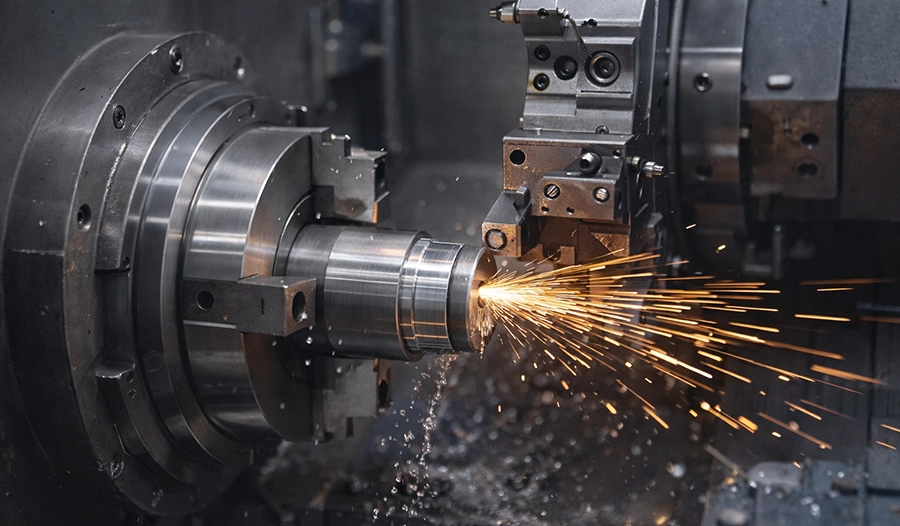
1.A CNC lathe is a machine used for machining cylindrical parts by rotating the workpiece while a cutting tool removes material. CNC stands for Computer Numerical Control, which means the equipment operates based on programmed instructions rather than manual control.
2.The working principle of this turning machine is simple. The workpiece rotates, and the cutting tool moves along controlled axes to shape the material. The entire machining process is managed by a CNC system using programmed commands such as G-code.
3.This machine typically includes key components such as the spindle, chuck, tool turret, guideway, and CNC control system. These components work together to ensure accurate and efficient machining.
4.This equipment is widely used in industries such as automotive, aerospace, energy, and general machinery. It is essential for producing high-quality metal parts with consistent accuracy.
5.The machine is mainly used to produce round or symmetrical components such as shafts, bushings, pipes, threads, and precision metal parts. It is one of the most important pieces of equipment in modern manufacturing.
In CNC Lathe machining:
- The workpiece rotates
- The cutting tool moves along axes
- Material is removed to form the desired shape
Key features of CNC Lathe include:
- High precision (±0.005mm or better)
- High repeatability
- Automation
- Stable performance
CNC Lathe is commonly used to produce:
- Shafts
- Bushings
- Threads
- Cylindrical components
Compared with manual lathe machines, CNC lathes provide:
- Higher precision
- Better repeatability
- Automation for mass production
CNC lathes are also referred to as CNC turning machines or automatic turning systems depending on their level of automation. Because of their efficiency and precision, this equipment is essential in modern manufacturing.
How Does CNC Lathe Work
A CNC lathe works by rotating the workpiece while a cutting tool moves along programmed paths to remove material and create the desired shape. The entire process is controlled by a CNC system using digital instructions.
The machining process of this equipment can be divided into several key steps:
Step 1: Programming
The process starts with programming.
Operators create a CNC program using G-code, which defines:
- Tool path
- Spindle speed
- Feed rate
- Cutting sequence
The CNC system reads these instructions and controls all machine movements automatically.
Step 2: Workpiece Clamping
The workpiece is fixed on the spindle using a chuck or collet.
Proper clamping ensures stability and machining accuracy.
A stable setup is essential for achieving high precision and preventing vibration during machining.
Step 3: Workpiece Rotation
The spindle rotates the workpiece at a controlled speed.
The rotation speed depends on:
- Material type
- Cutting conditions
- Required surface finish
This rotation is the core of CNC turning operations.
Step 4: Cutting Tool Movement
The cutting tool moves along different axes (usually X and Z axis) to remove material.
Common operations include:
- Turning
- Facing
- Drilling
- Threading
- Grooving
The CNC system ensures precise coordination between tool movement and workpiece rotation.
Step 5: Machining and Material Removal
As the tool contacts the rotating workpiece, material is gradually removed to form the final shape.
This process allows the CNC lathe to produce:
- Cylindrical parts
- Conical shapes
- Threads
- Complex profiles
Step 6: Finishing and Inspection
After machining is completed:
- Surface finish is checked
- Dimensions are measured
- Tolerance is verified
Precision measurement ensures the final product meets quality requirements.
The working principle of a CNC lathe can be summarized as:The workpiece rotates, and the cutting tool moves in a controlled path to shape the material.
Why CNC Lathe is Efficient
CNC lathe machines are highly efficient because:
- The process is automated
- Machining parameters are precisely controlled
- Repeatability is very high
This makes CNC lathe ideal for mass production and high-precision machining.
Types of CNC Lathe by Structure: Applications and Products
CNC lathe machines can be classified by structure into three main types: horizontal models, vertical models, and slant bed designs. Each type is suitable for different industries and produces different categories of products.
1.Horizontal CNC Lathe
A horizontal CNC lathe is a standard machine configuration where the workpiece is mounted horizontally and rotates during machining.
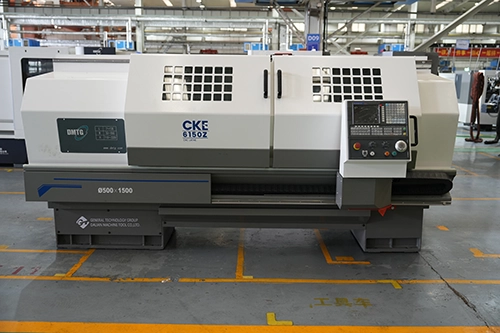
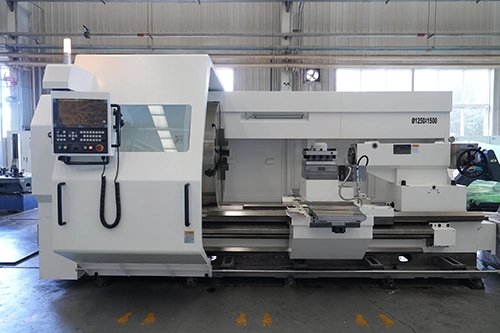
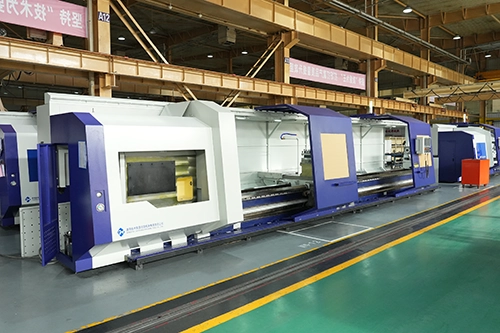
Horizontal CNC lathe is widely used in industries such as:
- Automotive industry
- Machinery manufacturing
- General metal processing
- Repair workshops
Horizontal CNC lathe is mainly used to produce:
- Shafts
- Bushings
- Sleeves
- Threaded rods
- Pipe fittings
Key Advantage
- Suitable for general-purpose machining
- Cost-effective
- Easy to operate
2.Vertical CNC Lathe
A vertical CNC lathe is designed with a vertical spindle, where the workpiece is placed on a horizontal table.
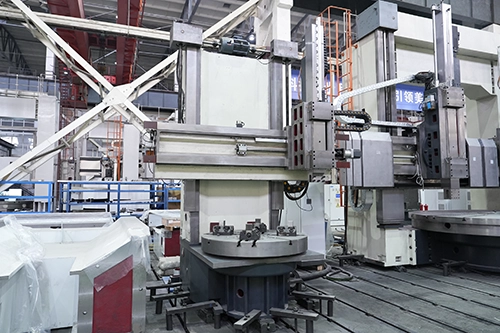
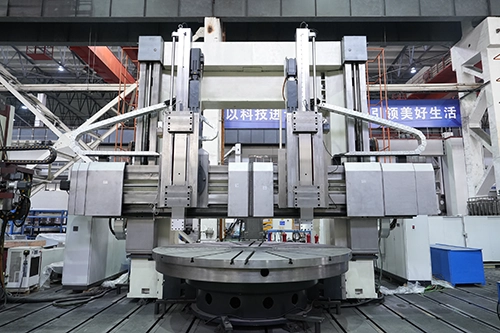
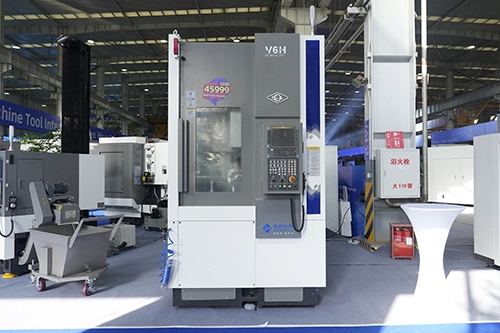
Vertical CNC lathe is commonly used in industries such as:
- Energy industry (wind power, oil & gas)
- Heavy machinery
- Shipbuilding
- Aerospace (large components)
Vertical CNC lathe is suitable for machining:
- Large flanges
- Bearing housings
- Valve bodies
- Turbine components
- Large discs
Key Advantage
- Excellent stability for heavy parts
- Ideal for large diameter machining
3.Slant Bed CNC Lathe
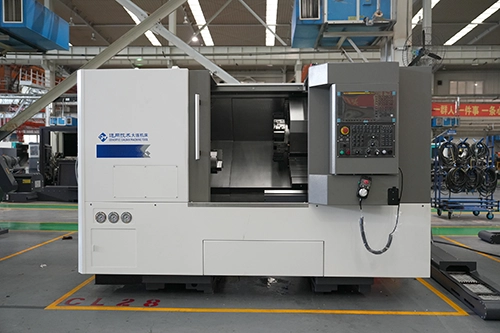
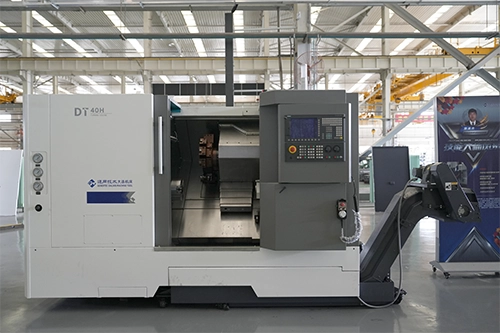
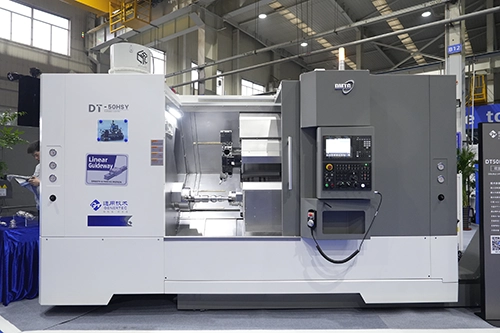
A slant bed CNC lathe features an inclined bed structure, which improves rigidity and chip removal efficiency.
Industries
- Precision machining industry
- Electronics industry
- Medical equipment
- Automotive parts manufacturing
- Aerospace components
Typical Products
- Screws
- Nuts
- Bolts
- Precision shafts
- Small high-precision components
Key Advantage
- High precision and stability
- Better chip evacuation
- Suitable for automated production
| Type | Structure | Industries | Typical Products |
|---|---|---|---|
| Horizontal CNC Lathe | Horizontal spindle | Automotive, general manufacturing | Shafts, bushings, pipes |
| Vertical CNC Lathe | Vertical spindle | Energy, heavy industry | Flanges, discs, valve bodies |
| Slant Bed CNC Lathe | Inclined bed | Precision, electronics | Screws, nuts, precision parts |
Different CNC lathe structures determine their applications and product types. Horizontal CNC lathe is suitable for general machining, vertical CNC lathe is ideal for large heavy parts, and slant bed CNC lathe is best for high precision components such as screws and nuts.
CNC Lathe vs CNC Milling Machine
The main difference between CNC lathe and CNC milling machine is how the workpiece and cutting tool move during machining. In a turning process, the workpiece rotates while the cutting tool remains relatively stationary, making it ideal for producing cylindrical parts such as shafts, pipes, and threaded components. In contrast, a CNC milling machine keeps the workpiece fixed while the cutting tool rotates and moves along multiple axes, allowing it to create complex shapes, flat surfaces, and intricate geometries.
These machines are widely used for high-efficiency turning operations and mass production of round parts, especially in industries such as automotive and energy. On the other hand, milling equipment is better suited for precision machining of complex components, including molds, aerospace parts, and structural components.
| Feature | CNC Lathe | CNC Milling Machine |
|---|---|---|
| Movement | Workpiece rotates | Tool rotates |
| Shape | Cylindrical parts | Complex surfaces |
| Application | Shafts, pipes | Blocks, molds |
| Efficiency | High for round parts | High for complex parts |
Understanding this difference helps in selecting the right machine.
Applications of CNC Lathe
CNC lathe machines are widely used in industries such as:
Automotive Industry
- Engine shafts
- Transmission components
Aerospace Industry
- High-precision parts
- Lightweight materials
Energy Industry
- Valves
- Pipeline components
Machinery Manufacturing
Standard industrial parts
- Mechanical components
CNC Lathe Machine Features
Modern CNC lathe machines offer:
- High precision machining
- High efficiency
- Stable performance
- Live tooling capability
Advanced CNC lathe machines include:
- CNC lathe with live tooling
- CNC lathe milling machine
- CNC mill and lathe combo
CNC Lathe Machine Price and Cost Factors
CNC lathe machine price varies significantly depending on machine size, configuration, precision level, and supplier capabilities. Understanding the key cost factors of this equipment helps buyers make informed decisions and avoid unnecessary expenses.
1. Machine Size and Capacity
One of the most important factors affecting CNC lathe machine price is the size of the machine.
- Small CNC lathe machines (for light-duty machining) usually cost less
- Large CNC lathe machines or heavy duty CNC lathes require stronger structures and higher power, resulting in higher costs
For example, a big CNC lathe designed for large diameter parts or long shafts will be significantly more expensive than a standard CNC lathe.
2. Machine Configuration and Features
The configuration of a CNC lathe machine has a direct impact on its price.
Basic configurations include:
- 2-axis CNC lathe
- Manual loading system
Advanced configurations include:
- CNC lathe with live tooling
- Multi-axis CNC lathe
- CNC mill lathe combo
- Automatic bar feeder systems
Machines with live tooling and milling capabilities are more expensive because they combine turning and milling functions, improving production efficiency.
3. Precision and Accuracy Requirements
Precision CNC lathe machines with higher accuracy levels require better components and stricter assembly standards.
Key factors include:
- Spindle quality
- Guideway rigidity
- Control system performance
For industries such as aerospace or medical manufacturing, where tight tolerance (±0.005mm or higher) is required, the CNC lathe machine price will be significantly higher.
4. Automation Level
Automation plays a critical role in CNC lathe cost.
- Basic CNC lathe → lower cost
- CNC automatic lathe → higher cost
- Fully automated production line → highest cost
Automation systems may include:
- Automatic loading/unloading
- Robotic integration
- Smart control systems
Although the initial investment is higher, automation reduces labor costs and increases long-term efficiency.
5.Materials and Build Quality
The materials used in the machine structure affect both performance and price.
High-quality CNC lathe machines typically use:
- High-grade cast iron
- Reinforced machine bed
- Precision components
Better build quality ensures:
- Higher rigidity
- Better vibration control
- Longer service life
6. CNC System and Components
The CNC control system is a key cost factor.
Common systems include:
- FANUC
- SIEMENS
- Mitsubishi
High-end CNC systems offer:
- Better stability
- Faster processing
- Higher precision
This will increase the overall CNC lathe machine price.
7. Supplier and Manufacturing Capability
CNC lathe manufacturers and suppliers also influence pricing.
Reliable CNC lathe manufacturers usually provide:
- Better quality control
- Strong after-sales service
- Spare parts availability
Choosing an experienced supplier ensures long-term reliability, even if the initial price is slightly higher.
8. Additional Costs to Consider
When evaluating CNC lathe machine price, buyers should also consider:
- Shipping and logistics costs
- Installation and commissioning
- Operator training
- Maintenance and spare parts
These hidden costs can significantly affect the total investment.
In general:
- Entry-level CNC lathe → lower price range
- Mid-range CNC lathe with live tooling → medium price
- High-end precision CNC lathe → premium price
The best CNC lathe is not the cheapest one, but the one that provides the best balance between performance, reliability, and cost.
How to Choose CNC Lathe
The best CNC lathe depends on your machining requirements, material, production volume, and budget, and choosing the right machine is critical for ensuring production efficiency, machining accuracy, and long-term cost control.buyers should focus on the following key factors:
1. Workpiece Type and Material
The first step is to clearly understand what you will produce.
Different materials require different machine configurations:
- Steel → requires high rigidity and torque
- Aluminum → requires high spindle speed
- Stainless steel → requires stable cutting performance
👉 If you are machining shafts, pipes, or threaded parts, a standard CNC lathe is sufficient.
👉 If you are producing small precision parts like screws and nuts, a slant bed CNC lathe is more suitable.
2. Machining Accuracy Requirements
Accuracy is one of the most important factors when choosing a CNC lathe.
Buyers should consider:
- Required tolerance (e.g. ±0.01mm or ±0.005mm)
- Surface finish quality
- Repeatability
High-precision industries such as aerospace and medical require precision CNC lathe machines with stable structure and high-quality components.
3. Machine Size and Capacity
The CNC lathe must match your workpiece dimensions.
Key parameters include:
- Maximum turning diameter
- Maximum turning length
- Spindle bore size (important for pipe machining)
👉 For large parts → choose large CNC lathe or vertical CNC lathe
👉 For small parts → choose compact or precision CNC lathe
4. Production Volume
Production scale directly affects machine selection.
- Small batch production → standard CNC lathe
- Mass production → CNC automatic lathe or multi-axis CNC lathe
Automation can significantly reduce labor costs and improve efficiency.
5. Machine Configuration and Functions
Different configurations determine machining capability.
Key options include:
- CNC lathe with live tooling (turning + milling)
- Multi-axis CNC lathe
- CNC mill lathe combo
👉 If your parts require drilling or milling, choose a CNC lathe with live tooling.
👉 If your parts are simple, a 2-axis CNC lathe is more cost-effective.
6. Spindle Power and Rigidity
Spindle performance affects cutting capability.
Buyers should evaluate:
- Spindle motor power
- Torque
- Machine rigidity
👉 Heavy cutting → requires heavy duty CNC lathe
👉 Light precision machining → requires high-speed spindle
7. CNC System and Control
The CNC system determines machine stability and ease of use.
Common systems include:
- FANUC
- SIEMENS
A reliable CNC system ensures:
- Stable operation
- Easy programming
- Better long-term performance
8. CNC System and Control
The CNC system determines machine stability and ease of use.
Common systems include:
- FANUC
- SIEMENS
A reliable CNC system ensures:
- Stable operation
- Easy programming
- Better long-term performance
9. Total Cost, Not Just Price
The cheapest CNC lathe is not always the best choice.
Buyers should consider:
- Initial machine cost
- Shipping and installation
- Maintenance cost
- Long-term reliability
👉 A slightly higher investment in a high-quality CNC lathe can reduce long-term operating costs.
Key Selection Summary
The best CNC lathe depends on:
👉 Material
👉 Part size
👉 Precision requirements
👉 Production volume
👉 Machine configuration
👉 Supplier reliability
Key Advantages of Modern Turning Machines
Modern turning equipment offers several advantages that make it essential in industrial production. These advantages are not only related to performance but also to long-term operational efficiency.
One of the most important benefits is high consistency. Once the machining program is set, the system can produce identical parts repeatedly with minimal deviation. This is critical for industries that require strict quality control.
Another key advantage is reduced labor dependency. Automated control allows a single operator to manage multiple machines at the same time, which significantly lowers labor costs and improves productivity.
In addition, these systems provide excellent surface finish quality. With optimized cutting parameters and stable structure, the final products often require little or no secondary processing.
Common Problems and Solutions in Machining
During the machining process, various problems may occur due to improper setup, tool wear, or machine conditions. Understanding these common issues and their solutions helps improve production efficiency and product quality.
1. Poor Surface Finish
Problem
The machined surface appears rough, with visible tool marks or irregular texture.
Possible Causes
- Incorrect cutting parameters
- Tool wear or damage
- Insufficient machine rigidity
- Improper cooling
Solutions
- Optimize cutting speed and feed rate
- Replace or regrind cutting tools
- Improve setup stability
- Use proper coolant to reduce heat
👉 A stable process ensures smoother surface quality and better product appearance.
2. Dimensional Inaccuracy
Problem
The final part does not meet required tolerances or dimensions.
Possible Causes
- Machine vibration
- Thermal deformation
- Incorrect program settings
- Tool offset errors
Solutions
- Check and calibrate machine alignment
- Adjust tool offsets accurately
- Control temperature during machining
- Use high-precision measuring tools
👉 Accurate setup and calibration are essential for maintaining consistent quality.
3. Tool Wear Too Fast
Problem
Cutting tools wear out quickly, increasing production cost.
Possible Causes
- Excessive cutting speed
- Hard material
- Improper tool selection
- Lack of lubrication
Solutions
- Select suitable tool materials (carbide, coated tools)
- Reduce cutting speed if necessary
- Apply proper cooling and lubrication
- Use optimized cutting strategies
👉 Proper tool management significantly reduces downtime and cost.
4. Vibration and Chatter
Problem
Vibration occurs during machining, affecting surface finish and tool life.
Possible Causes
- Low machine rigidity
- Improper clamping
- Long tool overhang
- Incorrect cutting parameters
Solutions
- Improve workpiece clamping
- Use shorter and more rigid tools
- Adjust cutting parameters
- Ensure machine foundation stability
👉 Reducing vibration improves both precision and efficiency.
5. Chip Control Issues
Problem
Chips are not properly removed, causing entanglement or damage.
Possible Causes
- Improper chip breaking
- Incorrect tool geometry
- Lack of coolant
Solutions
- Use chip breaker tools
- Adjust feed rate and cutting depth
- Improve coolant flow
👉 Effective chip control ensures safe and continuous machining.
6. Machine Overheating
Problem
The system becomes overheated during long operation.
Possible Causes
- High cutting load
- Insufficient cooling
- Poor lubrication
Solutions
- Reduce cutting load
- Use proper coolant system
- Ensure regular maintenance
👉 Temperature control is critical for maintaining long-term machine stability.
CNC Lathe FAQ
What is CNC Lathe used for
CNC Lathe is used for machining cylindrical parts such as shafts, pipes, and threaded components.
How accurate is CNC Lathe
CNC Lathe can achieve accuracy up to ±0.005mm depending on configuration.
Is CNC Lathe suitable for mass production
Yes, CNC Lathe is ideal for batch production due to automation and repeatability.
What materials can CNC Lathe process
- Steel
- Aluminum
- Brass
- Titanium