CNC Lathe Price is one of the most searched topics in the manufacturing industry. Buyers from automotive, aerospace, energy, mold, and metal processing sectors often compare CNC Lathe Price before purchasing a CNC lathe machine. However, CNC Lathe Price can vary greatly depending on machine configuration, precision, automation level, and supplier. Some CNC lathe machines cost under USD 10,000, while high-end models may exceed USD 200,000.
This article explains the key factors affecting CNC Lathe Price and helps buyers choose the most suitable CNC lathe machine for their production needs.
What Is CNC Lathe Price?
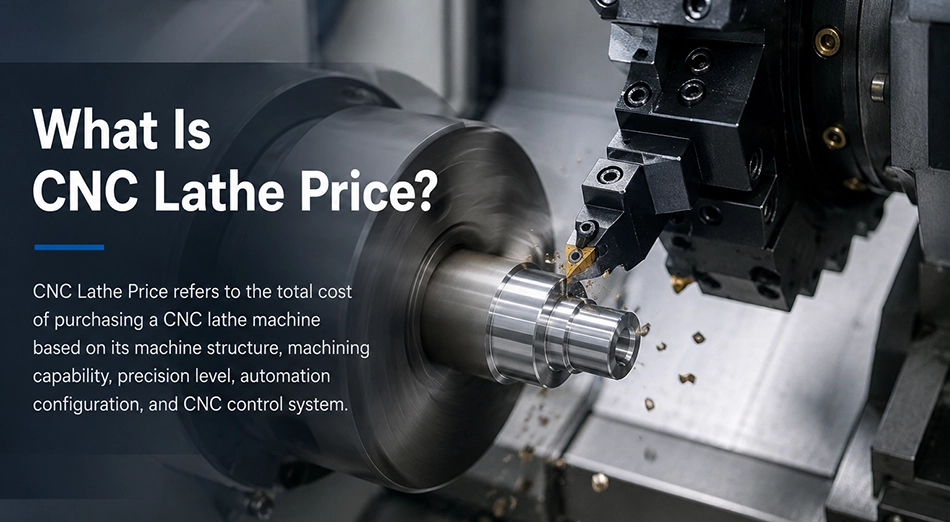
CNC Lathe Price refers to the total cost of a CNC lathe machine based on factors such as machine structure, machining capability, precision, automation level, and CNC system configuration. Different industries require different CNC lathe types, so CNC Lathe Price can vary greatly. For example, flat bed CNC lathes usually have a lower CNC Lathe Price, while slant bed CNC lathes, CNC turning centers, heavy-duty CNC lathes, and CNC vertical lathes typically cost more because of their higher rigidity, larger machine size, and advanced machining capability.
The table below shows the typical CNC Lathe Price range based on different CNC lathe classifications commonly used in industrial manufacturing:
| CNC Lathe Type | Typical Application | Estimated CNC Lathe Price |
|---|---|---|
| Flat Bed CNC Lathe | General turning, shaft parts, simple metal machining | USD 10,000–40,000 |
| Slant Bed CNC Lathe | Higher-speed turning, better chip removal, batch production | USD 25,000–90,000 |
| CNC Turning Center | Turning, drilling, tapping, milling in one setup | USD 50,000–180,000 |
| CNC Vertical Lathe | Large discs, rings, wheels, heavy round workpieces | USD 80,000–300,000+ |
| Heavy-Duty CNC Lathe | Large shafts, rollers, energy and heavy equipment parts | USD 100,000–500,000+ |
| Swiss-Type CNC Lathe | Small precision parts, medical, electronics, long slender parts | USD 60,000–250,000+ |
| Multi-Axis CNC Lathe | Complex parts, high-efficiency production, fewer setups | USD 80,000–300,000+ |
The estimated CNC Lathe Price above is only for reference. The final CNC Lathe Price depends on factors such as spindle power, CNC system brand, guideway structure, turret configuration, automation level, live tooling capability, and customized machine requirements.
Main Factors Affecting CNC Lathe Price
CNC Lathe Price is influenced by many technical and manufacturing factors. Buyers often notice that two CNC lathe machines with similar appearances may have completely different prices. In most cases, the difference is not only related to machine size, but also to machining precision, machine structure, CNC system configuration, automation capability, and long-term production stability. Understanding these factors is extremely important for buyers who want to select the right CNC lathe machine while controlling investment costs.
Machine Structure and Design
Machine structure is one of the most important factors affecting CNC Lathe Price. Different CNC lathe structures are designed for different machining requirements. For example, a flat bed CNC lathe usually has a simpler structure and lower manufacturing cost, making it suitable for general turning operations and small workshops. In comparison, a slant bed CNC lathe provides better rigidity, higher machining stability, and faster chip removal performance. Because of its stronger machine body and more advanced structural design, the CNC Lathe Price of a slant bed CNC lathe is usually much higher.
Heavy-duty CNC lathes and vertical CNC lathes also require larger castings, stronger guideways, and higher spindle torque. These features significantly increase machine weight, manufacturing difficulty, and overall CNC Lathe Price.
Machining Precision and Stability
Machining precision directly affects CNC Lathe Price. High-precision CNC lathe machines require more advanced manufacturing processes and higher-quality machine components. Precision ball screws, linear guideways, servo systems, spindle bearings, and thermal compensation systems all increase machine cost.
Industries such as aerospace, automotive parts manufacturing, medical equipment, and mold machining usually require extremely high machining accuracy and repeatability. CNC lathe machines used in these industries often have tighter assembly tolerances and better dynamic stability, resulting in higher CNC Lathe Price levels.
In addition, long-term stability is another important factor. Machines designed for continuous industrial production must maintain machining accuracy for many years. This requires stronger machine structures and higher-quality core components, which also increase CNC Lathe Price.
CNC System Configuration
The CNC system is considered the control center of the CNC lathe machine. Different CNC systems create significant CNC Lathe Price differences. Entry-level CNC systems are suitable for basic turning operations, while high-end CNC systems support complex interpolation, multi-axis machining, automation integration, and intelligent production management.
Many buyers prefer internationally recognized CNC systems because of better reliability, easier programming, and stronger global service support. However, advanced CNC systems usually increase the overall CNC Lathe Price substantially.
The servo motor system, drive system, electrical cabinet quality, and software functions also influence machine performance and final CNC Lathe Price.
Spindle Power and Cutting Capability
Spindle performance is another major factor affecting CNC Lathe Price. Higher spindle power allows the CNC lathe machine to process harder materials and perform heavy-duty cutting operations more efficiently.
Large spindle bores, high spindle torque, and high-speed spindle systems require stronger motors and more advanced cooling systems. Machines designed for processing stainless steel, titanium alloy, and heavy metal workpieces usually have higher CNC Lathe Price because they demand stronger cutting capability and higher machine rigidity.
For large-diameter shaft machining or energy equipment manufacturing, heavy-duty CNC lathe machines often require oversized spindle systems, which further increase CNC Lathe Price.
Automation and Production Efficiency
Modern manufacturing increasingly focuses on automation and production efficiency. CNC lathe machines equipped with automatic bar feeders, robotic loading systems, live tooling, Y-axis functions, and automatic chip conveyors usually have much higher CNC Lathe Price levels.
Although automation increases initial investment cost, it greatly improves production efficiency, reduces labor costs, and minimizes human error. For factories operating large-scale batch production, automated CNC turning centers often provide better long-term economic value despite their higher CNC Lathe Price.
Multi-axis CNC lathe machines and CNC turning centers with live tooling can complete multiple machining processes in one setup, reducing production time and improving machining consistency. These advanced functions are important reasons why high-end CNC Lathe Price ranges are significantly higher than standard models.
Machine Brand and Manufacturing Quality
Machine brand reputation also affects CNC Lathe Price. Well-known CNC lathe manufacturers usually invest heavily in machine research, quality control, assembly standards, and after-sales service systems. As a result, their CNC Lathe Price is often higher than that of smaller manufacturers.
High-quality CNC lathe suppliers typically provide:
- Better machine durability
- More stable machining performance
- Longer machine service life
- Faster technical support
- Reliable spare parts supply
For industrial buyers, long-term operating reliability is often more important than simply obtaining the lowest CNC Lathe Price. Low-cost CNC lathe machines may reduce initial investment, but poor machining stability and maintenance problems can increase total production cost over time.
CNC Lathe Price by Machine Type
CNC Lathe Price changes greatly according to machine type. Different CNC lathe machines are designed for different workpieces, production volumes, machining accuracy, and automation requirements. A buyer should first understand the main CNC lathe categories before comparing prices.
Flat Bed CNC Lathe
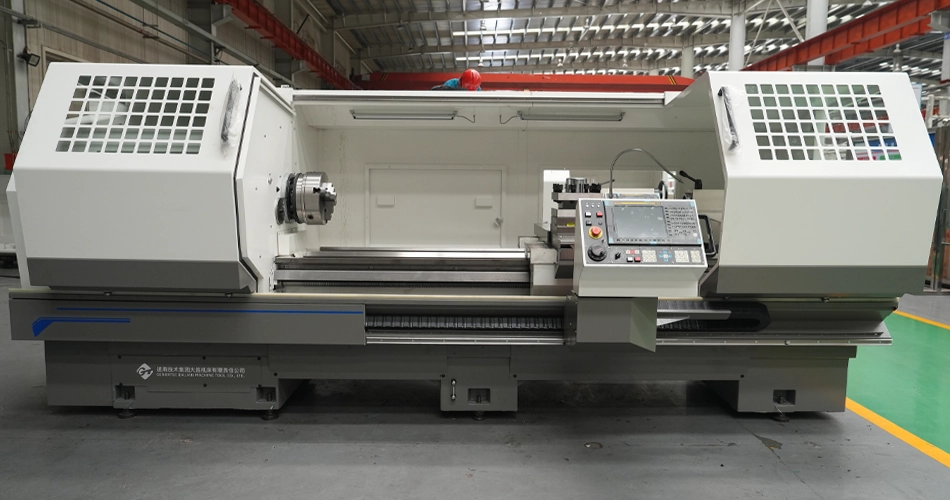
A flat bed CNC lathe is usually the most basic and economical CNC lathe type. It is suitable for general turning, shaft parts, simple metal components, repair work, and small to medium batch production.
Its structure is simple, easy to operate, and convenient for maintenance. Therefore, the CNC Lathe Price of a flat bed CNC lathe is usually lower than other types.
Slant Bed CNC Lathe
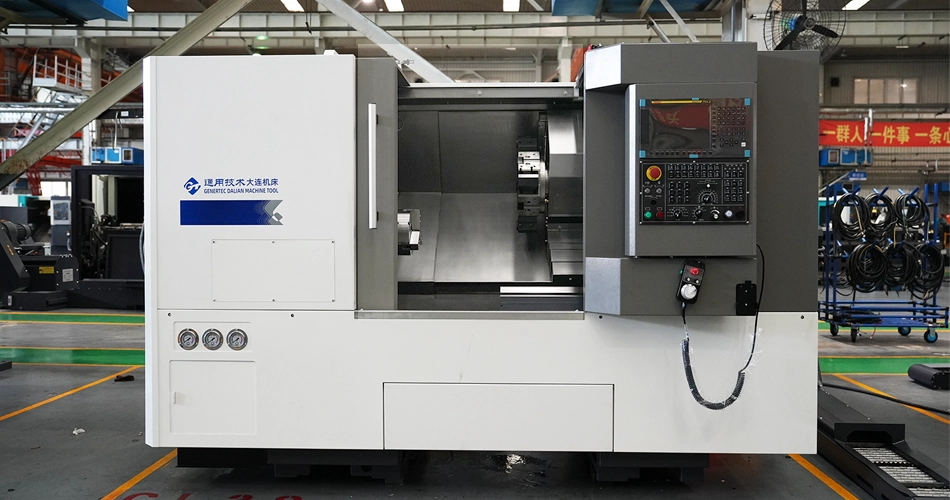
A slant bed CNC lathe is designed for higher rigidity, faster chip removal, and better machining stability. It is widely used in batch production, automotive parts, hydraulic components, and precision metal parts.
Compared with a flat bed CNC lathe, a slant bed CNC lathe usually has a higher CNC Lathe Price because of its stronger structure, higher speed, and better production efficiency.
CNC Turning Center
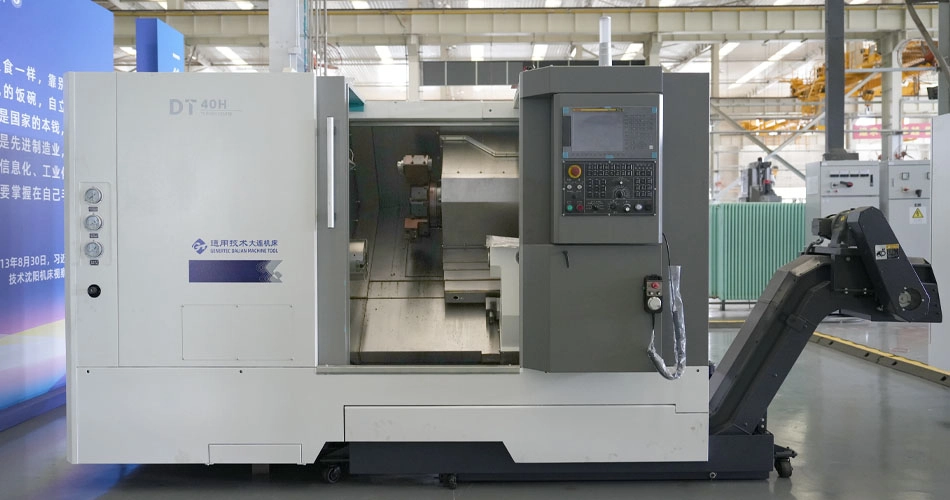
A CNC turning center is an upgraded CNC lathe machine. It can complete turning, drilling, tapping, boring, and sometimes milling in one setup. Some models can be equipped with live tooling, Y-axis, sub-spindle, and automatic tool systems.
Because of these advanced functions, the CNC Lathe Price of a CNC turning center is much higher than a standard CNC lathe. However, it can reduce setup time and improve machining efficiency.
CNC Vertical Lathe
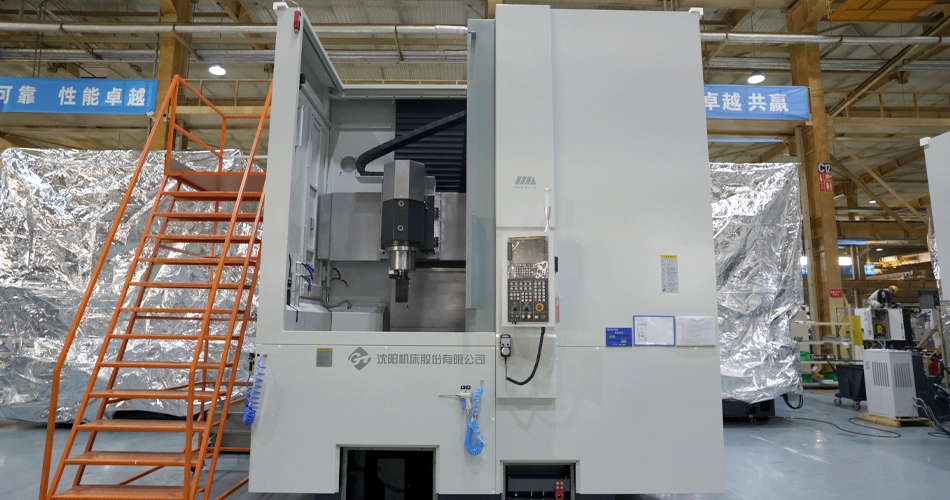
A CNC vertical lathe is mainly used for large, heavy, and short workpieces, such as wheels, discs, rings, flanges, gears, and large valve bodies. The workpiece is placed vertically on the table, which makes loading and machining heavy round parts easier.
CNC vertical lathes require large castings, high table load capacity, strong torque, and stable machine structures. As a result, the CNC Lathe Price is usually higher than horizontal CNC lathes.
Heavy-Duty CNC Lathe
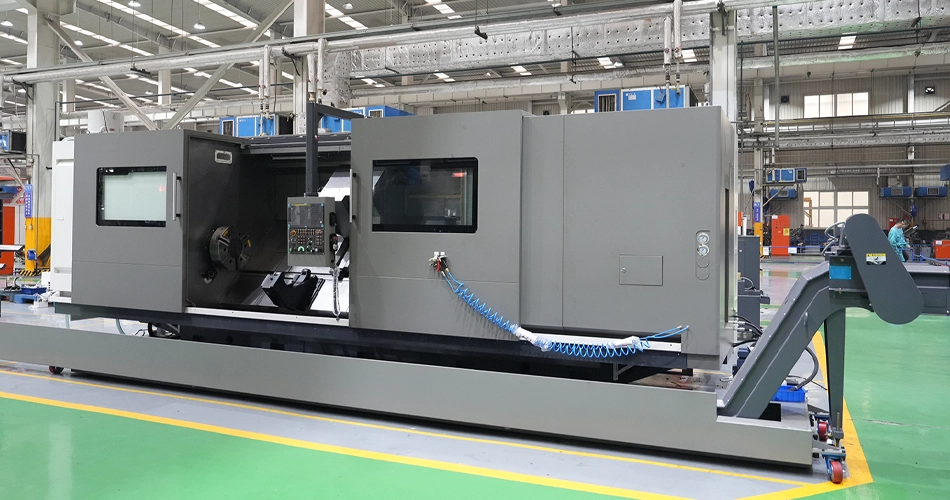
A heavy-duty CNC lathe is designed for large shafts, rollers, cylinders, energy equipment parts, shipbuilding components, and construction machinery parts. It usually has a longer bed, larger spindle bore, stronger motor power, and higher load capacity.
The CNC Lathe Price of a heavy-duty CNC lathe is high because the machine requires strong rigidity, large guideways, powerful spindle systems, and customized configurations.
Swiss-Type CNC Lathe
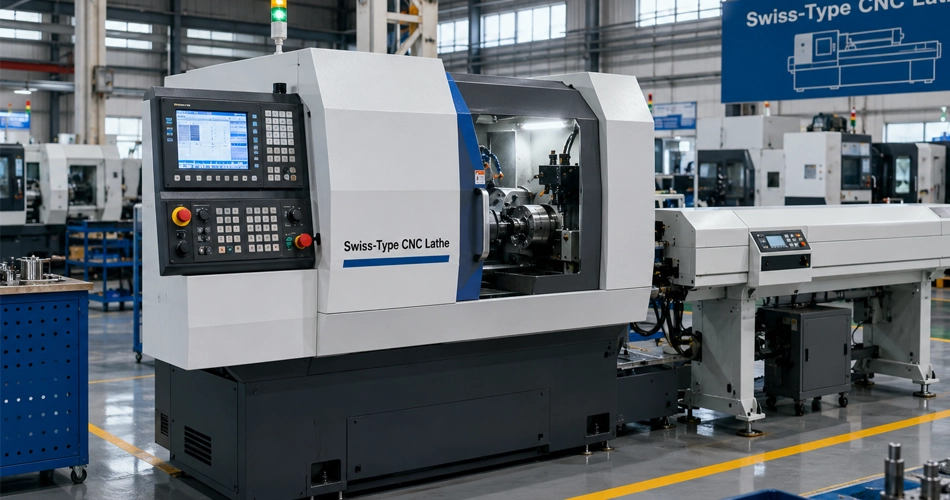
A Swiss-type CNC lathe is used for small, slender, and high-precision parts. It is common in medical devices, electronics, connectors, precision shafts, and small batch precision components.
This type of CNC lathe usually has high automation, multiple tools, and excellent repeatability. Therefore, its CNC Lathe Price is usually higher than standard small CNC lathe machines.
Multi-Axis CNC Lathe
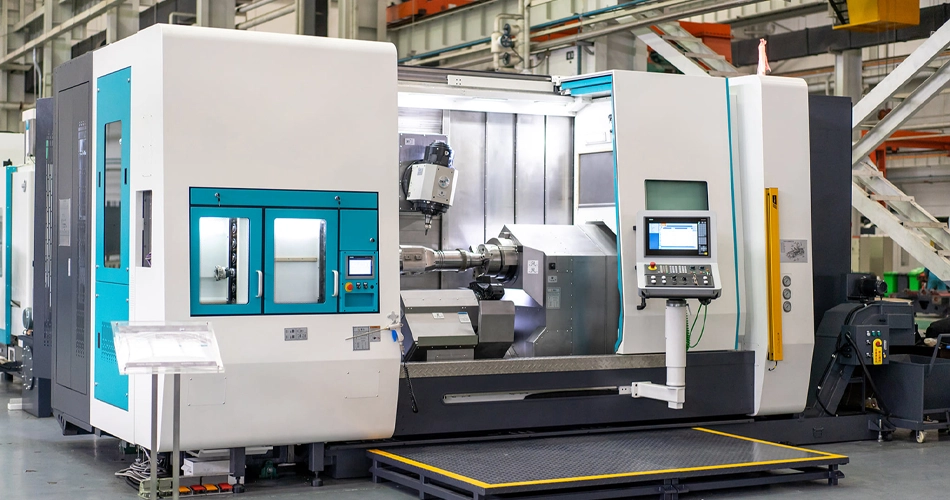
A multi-axis CNC lathe can process complex parts with fewer setups. It may include C-axis, Y-axis, live tooling, sub-spindle, or multiple turrets. This machine type is suitable for complex precision parts and high-efficiency production.
Because it combines advanced machining functions and automation capability, the CNC Lathe Price is usually in the medium-to-high range.
How CNC System Brands Affect CNC Lathe Price
The CNC system is one of the most important components of a CNC lathe machine. It directly affects machining precision, operating efficiency, automation capability, programming performance, and long-term production stability. Because of this, the CNC system brand has a major impact on CNC Lathe Price.
Different CNC systems are designed for different machining environments and production requirements. Some systems focus on high-speed precision machining, while others emphasize cost-effectiveness and easy operation. As a result, CNC Lathe Price can vary significantly depending on the CNC controller selected.
FANUC CNC System
FANUC is one of the most widely used CNC systems in the global manufacturing industry. It is commonly used in automotive manufacturing, aerospace machining, precision metal processing, and automated production lines.
Advantages of FANUC CNC System
- Excellent machining precision and stability
- Highly reliable for continuous industrial production
- Strong global after-sales support network
- Long machine service life
- Easy integration with automation systems and robots
- Widely recognized by international manufacturers
CNC lathe machines equipped with FANUC systems are often preferred for high-precision and high-volume production environments.
Siemens CNC System
Siemens CNC systems are widely used in advanced manufacturing industries and complex machining applications. They are especially popular in Europe and high-end automated production environments.
Advantages of Siemens CNC System
- Powerful multi-axis machining capability
- Advanced intelligent control functions
- High-speed processing performance
- Excellent automation integration capability
- User-friendly operation interface
- Suitable for complex and precision machining tasks
Siemens systems are commonly installed in premium CNC turning centers and advanced CNC machining equipment.
Mitsubishi CNC System
Mitsubishi CNC systems are widely used in precision machining and industrial manufacturing applications. They are known for stable performance and smooth machine operation.
Advantages of Mitsubishi CNC System
- Stable machining performance
- Fast data processing speed
- Smooth servo motor control
- Excellent high-speed machining capability
- Reliable operation for long production cycles
- Good compatibility with precision machining applications
Mitsubishi systems are commonly used in medium-to-high-end CNC lathe machines and automated production lines.
Syntec CNC System
Syntec CNC systems are widely used in cost-effective CNC lathe machines and CNC turning centers. They are especially popular among small and medium manufacturing companies.
Advantages of Syntec CNC System
- Competitive CNC Lathe Price
- Easy operation and programming
- Good compatibility with automation functions
- Stable performance for general machining applications
- Lower maintenance costs
- Suitable for small and medium production workshops
Syntec systems are often selected for balancing machining performance and investment cost.
GSK CNC System
GSK is one of the most common CNC systems used in economical CNC lathe machines. It is widely applied in standard turning operations and entry-level CNC machining environments.
Advantages of GSK CNC System
- Affordable CNC Lathe Price
- Easy operation for beginners
- Cost-effective for standard machining tasks
- Widely used in general metal processing
- Lower initial investment cost
- Suitable for simple turning applications
GSK systems are commonly chosen by factories looking for economical CNC lathe solutions.
CNC Lathe Price and Automation Levels
Automation has become one of the most important factors affecting CNC Lathe Price in modern manufacturing. As factories continue to improve production efficiency and reduce labor dependence, more buyers are choosing CNC lathe machines equipped with advanced automation systems. Although automation increases the initial CNC Lathe Price, it can significantly improve machining efficiency, product consistency, and long-term production profitability.
Traditional CNC lathe machines usually require manual loading, unloading, and operator supervision during machining. In comparison, automated CNC lathe machines can perform continuous production with minimal human intervention. This is especially important for industries such as automotive manufacturing, aerospace, hydraulic components, medical devices, and mass metal processing.
Automatic Bar Feeders
Automatic bar feeders are one of the most common automation options for CNC lathe machines. They automatically feed raw materials into the spindle, allowing the machine to run continuously for long production cycles.
Machines equipped with automatic bar feeders usually have a higher CNC Lathe Price because they improve production efficiency and reduce manual labor requirements. Automatic feeding systems are widely used in shaft machining, connector production, and precision metal parts manufacturing.
Robotic Loading and Unloading Systems
Many modern CNC turning centers now use robotic loading systems for automated production. Industrial robots can automatically load raw workpieces and remove finished parts, greatly reducing downtime between machining cycles.
Robotic automation increases CNC Lathe Price because it requires:
- Robot integration systems
- Safety protection systems
- Automation programming
- Additional sensors and control units
However, robotic systems can dramatically improve productivity and are highly suitable for large-scale industrial manufacturing.
Live Tooling and Multi-Function Machining
CNC lathe machines equipped with live tooling can complete turning, drilling, milling, tapping, and boring operations in a single setup. This reduces secondary machining processes and improves production efficiency.
Live tooling systems increase CNC Lathe Price because they require:
- Additional driven tool systems
- More advanced spindle synchronization
- Stronger CNC control capability
- More complex turret structures
For factories producing complex metal components, live tooling can greatly reduce production time and improve machining consistency.
Y-Axis and Multi-Axis Automation
Advanced CNC turning centers may include Y-axis, C-axis, sub-spindle systems, or multi-axis machining capability. These functions allow the machine to process highly complex parts with fewer setups.
As automation level increases, CNC Lathe Price also rises because the machine requires:
- More servo motors
- Higher CNC processing capability
- Advanced interpolation functions
- More complex machine structures
Multi-axis CNC lathe machines are commonly used in aerospace components, medical parts, precision connectors, and high-end industrial equipment manufacturing.
Automatic Tool Changer Systems
Automatic tool changers improve machining flexibility and reduce manual intervention. Machines with larger tool capacity can complete more machining operations automatically, which is especially beneficial for batch production and complex part machining.
Automatic tool changer systems increase CNC Lathe Price because they involve:
- Additional tool magazine systems
- More complex turret structures
- Faster servo control systems
- Intelligent tool management functions
Factories focusing on efficiency and flexible production often prefer CNC turning centers with automatic tool changer capability.
Hidden Costs Beyond CNC Lathe Price
Many buyers compare CNC Lathe Price only from the machine quotation, but the real cost difference often comes from machine quality, manufacturing standards, and production reliability. Two CNC lathe machines may look similar in appearance, yet their long-term production performance can be completely different.
For industrial manufacturers, hidden costs are usually caused by poor machine stability, low component quality, inaccurate machining performance, and weak technical support. These problems may not appear during the initial purchasing stage, but they can create serious production losses after the machine enters continuous operation.
Logistics and Packaging Quality
Shipping cost is an unavoidable expense for overseas buyers, but packaging quality is equally important. Poor export packaging may cause machine damage during transportation, especially for precision CNC lathe machines.
Professional CNC lathe manufacturers usually provide:
- Vacuum anti-rust protection
- Strong wooden export packaging
- Shock-resistant transportation support
- Professional loading solutions
Better packaging standards may slightly increase CNC Lathe Price, but they greatly reduce transportation risks and machine damage.
After-Sales Service and Spare Parts Support
Technical support is one of the most important hidden values behind CNC Lathe Price. Some suppliers offer very low machine prices but cannot provide fast spare parts supply or professional technical assistance.
Strong after-sales support helps buyers:
- Reduce downtime
- Solve machining problems quickly
- Maintain production efficiency
- Extend machine service life
Professional CNC lathe manufacturers usually provide installation guidance, remote support, spare parts inventory, and long-term technical service.
Production Efficiency and Long-Term Value
A lower CNC Lathe Price does not always mean lower manufacturing cost. Machines with weak rigidity, unstable precision, or poor automation capability may reduce production efficiency over time.
High-quality CNC lathe machines often provide:
- Faster machining speed
- Better surface finish
- Higher production consistency
- Lower scrap rates
- Longer machine lifespan
For industrial manufacturers, production stability and machining efficiency are often more valuable than simply choosing the lowest CNC Lathe Price.
How to Choose the Right CNC Lathe Machine
Choosing the right CNC lathe machine is one of the most important decisions for manufacturers and industrial buyers. Different industries have completely different machining requirements, production capacities, and precision standards. A CNC lathe machine that works well for automotive parts production may not be suitable for heavy equipment machining or precision medical components.
When evaluating CNC Lathe Price, buyers should not focus only on the machine quotation. The right CNC lathe machine should match the factory’s production requirements, workpiece size, machining material, automation level, and long-term production goals. Selecting the wrong machine may reduce machining efficiency, increase production costs, and limit future manufacturing capability.
Workpiece Size and Weight
The size and weight of the workpiece are the first factors buyers should consider. Small precision parts usually require compact CNC lathe machines or Swiss-type CNC lathes, while large shafts, rollers, and heavy components require heavy-duty CNC lathes or CNC vertical lathes.
Important factors include:
- Maximum turning diameter
- Maximum turning length
- Spindle bore size
- Machine load capacity
Choosing the correct machine size helps improve machining stability and production efficiency.
Machining Material
Different materials require different cutting capability and machine rigidity. Aluminum and brass are relatively easy to machine, while stainless steel, titanium alloy, and hardened steel require stronger spindle torque and more stable machine structures.
For difficult-to-machine materials, buyers should focus on:
- Spindle power
- Machine rigidity
- Guideway structure
- Cooling system performance
Machines designed for heavy cutting applications usually have higher CNC Lathe Price because of stronger structural design and higher machining capability.
Machining Accuracy Requirements
Machining accuracy directly affects CNC lathe selection. General metal processing may only require standard machining precision, while aerospace, medical equipment, and precision mold industries require extremely high accuracy and repeatability.
High-precision CNC lathe machines usually include:
- Precision spindle systems
- High-quality ball screws
- Stable servo systems
- Advanced CNC controllers
- Thermal stability compensation
Factories producing precision components should prioritize long-term machining stability rather than only considering lower CNC Lathe Price.
Production Volume and Efficiency
Production volume is another key factor when choosing a CNC lathe machine. Small batch production may only require a standard CNC lathe, while mass production environments often need automated CNC turning centers with higher machining efficiency.
For high-volume manufacturing, buyers should consider:
- Automatic bar feeders
- Live tooling systems
- Multi-axis machining capability
- Robotic loading systems
- Automatic tool changers
Higher automation levels can significantly improve productivity and reduce labor costs.
CNC System Selection
The CNC system affects machine operation, programming capability, and production stability. Different CNC systems are suitable for different production environments.
Buyers should consider:
- Ease of operation
- Programming functions
- Automation compatibility
- Global technical support
- Spare parts availability
Well-known CNC systems are often preferred for long-term industrial production because of better reliability and stronger technical support.
Machine Structure and Rigidity
Machine structure directly affects cutting stability and machining performance. Flat bed CNC lathes are suitable for standard machining operations, while slant bed CNC lathes provide better rigidity, higher speed, and improved chip removal capability.
For heavy-duty cutting and precision machining, stronger machine rigidity is extremely important. A stable machine structure helps reduce vibration and improve surface finish quality.
Supplier Capability and Technical Support
Choosing a reliable CNC lathe supplier is just as important as selecting the machine itself. Professional manufacturers usually provide:
- Stable machine quality
- Strict quality inspection
- Installation support
- Spare parts supply
- Long-term technical service
Strong after-sales support helps reduce downtime and improve long-term production reliability.
Future Production Expansion
Many factories expand production capacity over time. Buyers should consider whether the CNC lathe machine can support future upgrades such as:
- Automation systems
- Robotic integration
- Live tooling
- Multi-axis expansion
- Smart manufacturing systems
Machines with stronger upgrade capability often provide better long-term investment value.
Why Chinese CNC Lathe Manufacturers Are Competitive
Chinese CNC lathe manufacturers have become increasingly competitive in the global machine tool industry. In recent years, many international buyers have started purchasing CNC lathe machines from China because of improvements in manufacturing technology, machining quality, production capacity, and global service capability.
Today, Chinese CNC lathe manufacturers are no longer competing only on low CNC Lathe Price. Many factories now provide advanced CNC turning centers, heavy-duty CNC lathes, CNC vertical lathes, and automated machining solutions that meet the requirements of automotive, aerospace, energy equipment, mold manufacturing, and precision metal processing industries.
Competitive CNC Lathe Price
One of the biggest advantages of Chinese CNC lathe manufacturers is competitive CNC Lathe Price. China has a large industrial manufacturing system and a complete machine tool supply chain, which helps reduce production costs while maintaining stable manufacturing capability.
Compared with some European and Japanese machine tool brands, Chinese CNC lathe machines often provide:
- More competitive pricing
- Faster production cycles
- Flexible machine configurations
- Better cost-performance ratio
For many factories, this creates a strong advantage when balancing investment cost and machining capability.
Complete Industrial Supply Chain
China has one of the world’s largest machine tool manufacturing supply chains. Many CNC lathe manufacturers can independently produce or integrate key machine components such as:
- Machine castings
- Spindles
- Turrets
- Ball screws
- Guideways
- Hydraulic systems
- Electrical systems
A complete supply chain helps improve production efficiency and allows manufacturers to respond quickly to customer customization requirements.
This also helps stabilize CNC Lathe Price and shorten machine delivery time.
Strong Customization Capability
Many Chinese CNC lathe manufacturers provide flexible customization services based on customer production requirements. Buyers can customize:
- Spindle bore size
- Turning diameter
- Bed length
- CNC system brand
- Turret configuration
- Automation systems
- Live tooling capability
This flexibility helps factories choose CNC lathe machines that better match their actual machining applications and production goals.
Global Export Experience
Many Chinese CNC lathe manufacturers have extensive international export experience. CNC lathe machines produced in China are now widely exported to:
- Europe
- North America
- South America
- Southeast Asia
- Middle East markets
Global export experience helps manufacturers better understand international technical standards, transportation requirements, and after-sales service expectations.
Improved After-Sales Service
Professional Chinese CNC lathe suppliers increasingly focus on long-term customer support. Many manufacturers now provide:
- Online technical support
- Remote troubleshooting
- Installation guidance
- Spare parts supply
- Operator training
Improved after-sales capability has become an important factor helping Chinese CNC lathe manufacturers compete in international markets.
Conclusion
CNC Lathe Price is influenced by many factors, including machine type, CNC system, automation level, machining precision, and manufacturing quality. For industrial buyers, choosing the right CNC lathe machine is not only about finding a lower price, but also about improving long-term production efficiency, machining stability, and overall manufacturing value. A reliable CNC lathe machine with suitable configuration and strong technical support can provide better performance and higher return on investment over time.